

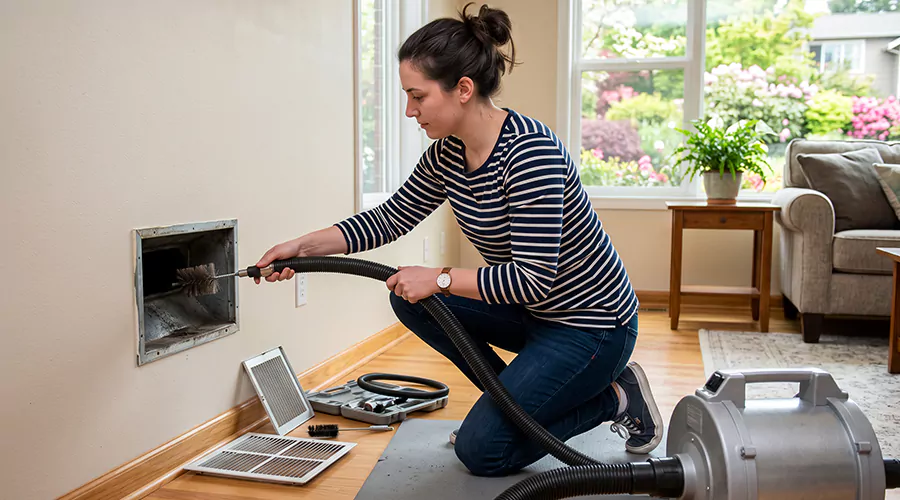
Cleaning air ducts involves loosening accumulated dust and debris from the duct surfaces and removing it with controlled vacuum collection equipment. Homeowners can clean accessible vent covers and nearby openings, but cleaning concealed supply and return ducts generally requires professional equipment. The most effective approach addresses the affected HVAC components without releasing debris into occupied rooms or damaging duct materials.
Air ducts carry heated or cooled air throughout a home. Return ducts bring indoor air back toward the HVAC equipment, while supply ducts deliver conditioned air to individual rooms. Dust can gradually collect within these passages as the system operates, especially when filters are poorly fitted or debris enters through damaged connections.
However, ordinary dust inside ductwork does not automatically require professional cleaning. The Environmental Protection Agency recommends considering duct cleaning when substantial visible mold is present in appropriate hard-surface components, vermin have infested the ducts, or excessive dust and debris are being released through supply registers. Routine cleaning without an identified problem has not been shown to provide consistent health benefits.
The cleaning method depends on the construction and condition of the ductwork. Rigid sheet metal may tolerate controlled brushing, while flexible ducts and internal fiberglass insulation require gentler methods. Identifying the materials before cleaning helps prevent a simple maintenance task from causing expensive damage.
What Is Air Duct Cleaning?
Air duct cleaning is the physical removal of accumulated dust and other debris from the air distribution system. It may involve supply ducts, return ducts, registers, plenums, and relevant HVAC equipment components. The work should have a defined scope based on the system's condition.
A professional cleaning service typically uses a source-removal method. Specialized tools loosen deposits while a powerful collection system maintains negative pressure inside the ductwork. The negative pressure helps keep disturbed particles moving toward the vacuum instead of being released into the living space.
Cleaning only the grille covers is different from cleaning the entire HVAC system. Grilles are accessible components that can be maintained with household equipment. Concealed ducts and mechanical components require additional access and cleaning methods.
When Do Air Ducts Actually Need Cleaning?
Air duct cleaning is most appropriate when there is evidence of significant contamination rather than a light coating of ordinary dust. A dusty return grille is common because air passes through it continuously. The condition of the internal ductwork matters more than the appearance of the register alone.
Excessive Dust and Debris Inside Ducts
Substantial debris inside the duct system may justify cleaning, particularly when particles are being released through supply openings. Construction work can introduce drywall dust or other materials if vents are left uncovered. Poorly fitted filters may also allow particles to enter equipment components.
The amount and location of the debris should be established before cleaning begins. Dust on one removable grille does not prove that every branch contains heavy deposits. A professional inspection can help identify which components require attention.
Confirmed Mold Contamination
Mold can develop on suitable surfaces when moisture remains present inside an HVAC system. Possible moisture sources include condensate drainage problems and water leaks affecting duct insulation. However, dark staining alone cannot reliably identify fungal growth.
When significant mold is suspected inside the system, professional assessment is appropriate before cleaning. Sound bare metal ducts may be restorable, but wet or moldy fiberglass duct material generally requires replacement. The moisture source must also be corrected or growth can return.
Pest Infestation
Rodents or insects may enter damaged ducts and leave nesting material or other contaminants behind. This is different from ordinary household dust because pest-related material can require special handling. The source of entry should be identified and corrected before cleaning proceeds.
A household vacuum should not be used to disturb suspected pest droppings. Qualified pest removal and appropriate cleaning may be necessary depending on the contamination. Sealing access openings helps reduce the likelihood of the same problem returning.
Construction and Renovation Debris
Renovation work may release fine dust and debris near open ducts. If the HVAC system operates while dusty work is underway, material may enter the duct network. This can create deposits beyond those expected during normal household use.
A post-renovation inspection can determine whether significant debris actually entered the system. Not every renovation requires duct cleaning, especially when the vents were protected and the equipment remained off during dusty work. The decision should reflect observed contamination rather than the fact that construction occurred.
What Are the Warning Signs of Dirty Air Ducts?
Potential duct contamination may become noticeable through material released from supply registers or visible deposits inside accessible passages. However, odors and household dust can originate from many sources unrelated to the ductwork. A careful assessment helps identify whether cleaning is the correct response.
Common signs worth investigating include:
- Substantial debris is visible inside accessible duct sections.
- Dust or particles are actually released through supply registers.
- Pest nesting material is found in the duct system.
- A known pest infestation has affected duct connections.
- Significant suspected mold appears on internal HVAC components.
- Water damage has affected duct insulation or nearby equipment.
- Construction debris entered unprotected openings.
- Unusual material remains near the supply opening after the grille is cleaned.
- A filter bypass problem has allowed excessive deposits to collect.
- Contaminated debris is documented during an HVAC inspection.
These conditions have different causes and do not all require the same cleaning method. A pest problem may need remediation before duct cleaning, while wet insulation can require replacement. Dust contamination without damage may be addressed through physical source removal.
An odor is not reliable proof of contaminated ductwork. Damp building materials or furnishings can also produce unpleasant smells. The source should be investigated before purchasing chemical fogging or cleaning services.
What Tools Are Needed to Clean Air Ducts?
The equipment depends on whether the task is limited to accessible grilles or involves professional internal cleaning. Household tools can remove dust from registers and nearby openings. Professional equipment is required to reach concealed branches and capture debris without spreading it indoors.
| Tool or Equipment | Main Purpose | Typical Use |
|---|---|---|
| Household vacuum with brush attachment | Removes dust from accessible surfaces | Vent covers and nearby openings |
| Soft cleaning brush | Loosens light deposits | Removable grilles |
| Microfiber cloth | Wipes washable surfaces | Register covers |
| Flashlight | Checks visible deposits | Accessible duct openings |
| Professional vacuum collection system | Captures internal debris | Full-system duct cleaning |
| Air whips and compatible brushes | Loosen deposits in duct passages | Professional source removal |
| Inspection camera | Views concealed sections | Documenting system condition |
| Suitable HVAC access equipment | Provides entry to appropriate duct sections | Professional cleaning |
| Replacement HVAC filter | Maintains normal filtration | After service when appropriate |
An ordinary household vacuum is not equivalent to a professional negative-pressure collection system. Aggressive brushing without controlled collection can release more particles into the home. Tools must also be suitable for the duct material to avoid tearing flexible liners or disturbing internal insulation.
How to Clean Accessible Air Vents Yourself?
Homeowners can clean removable supply and return covers and the immediately accessible surfaces around them. This is routine housekeeping rather than complete air duct cleaning. It can remove ordinary deposits without disturbing hidden duct sections.
Step 1. Turn Off the HVAC System
Switch off heating or cooling operation at the thermostat and wait until airflow stops. This makes it easier to clean nearby surfaces without dust being disturbed by the blower. Do not open sealed furnace or electrical compartments during the process.
Check that the vent is safely accessible. Ceiling grilles may require a stable step stool or ladder. Avoid leaning excessively or placing weight on fragile ceiling materials.
Step 2. Inspect the Register Cover
Examine the grille for accumulated dust or visible staining. A uniform dry deposit is commonly ordinary household dust. Irregular growth on damp surrounding materials may require further assessment before cleaning.
Photograph unusual deposits when their cause is uncertain. Do not scrape substantial suspected mold or disturb material that appears contaminated by pests. Those conditions require a different response from ordinary vent dusting.
Step 3. Remove the Cover When Appropriate
Some grilles can be removed by loosening screws or lifting them from the opening. Check their attachment before attempting removal. Painted-over screws and fragile surrounding surfaces can make the cover difficult to detach without damage.
Do not pull on connected dampers or insulation. If the grille cannot be removed easily, clean the visible surfaces while it remains installed. Removal is not necessary for routine dusting.
Step 4. Vacuum the Grille and Nearby Opening
Use a vacuum brush attachment to collect loose dust from the cover and the accessible edge of the opening. Work gently and keep the attachment near surfaces you can see. Do not push a household vacuum hose deep into concealed ducts.
For a return opening, dust may accumulate along the frame because room air is drawn toward the grille. Removing this material improves the appearance of the cover. It does not establish whether internal duct cleaning is necessary.
Step 5. Wash Suitable Vent Covers
A washable metal or plastic grille can often be cleaned with mild detergent and water when its finish permits. Use a soft cloth to remove remaining dust and allow the cover to dry completely. Avoid soaking electrical components or parts that contain absorbent insulation.
Some decorative or painted covers may require dry cleaning to protect their finish. Follow the manufacturer's instructions when available. Do not reinstall a damp cover against moisture-sensitive wall or ceiling material.
Step 6. Reinstall the Grille
Return the cover to its original position and secure it without overtightening the screws. Check that any adjustable louvers remain in the intended position. Blocking or changing register settings can affect airflow in the room.
Restore HVAC operation after the area is clean and the cover is secure. If unusual dust continues being released from the opening, investigate the connected duct rather than repeatedly washing the grille.
How Do Professionals Clean Air Ducts Step by Step?
Professional air duct cleaning uses equipment that can reach concealed passages while controlling the movement of loosened particles. A qualified provider should inspect the system and select a method compatible with its materials. The process should address the components identified in the work scope rather than cleaning only the visible openings.
Step 1. Inspect the HVAC System
The technician examines accessible supply and return openings and identifies the main duct materials. The inspection should establish whether significant contamination exists and where it is located. It should also identify damaged sections that may need repair before cleaning.
Possible asbestos-containing insulation and significant suspected mold require additional precautions. The contractor should not use ordinary cleaning equipment to disturb unknown hazardous material. Material identification and moisture correction may be necessary before the project proceeds.
Step 2. Protect the Living Space
The work area should be prepared to limit the release of dust. Furniture and nearby surfaces may need protection depending on the location of access points. The HVAC equipment is shut down and handled according to the cleaning plan.
Suitable vacuum collection equipment is then positioned so disturbed debris can be captured. The contractor should explain where the equipment exhausts and how particles will be contained. Improper collection can distribute dust into the home rather than remove it.
Step 3. Establish Controlled Negative Pressure
Professional source-removal cleaning generally uses a vacuum system to maintain negative pressure within the ductwork being cleaned. This draws air and loosened particles toward the collection equipment. It also reduces the chance of dust escaping through open registers.
The collection setup may involve portable or truck-mounted equipment. When vacuum exhaust is discharged indoors, suitable HEPA filtration is important. The equipment should remain appropriate for the system and the amount of debris being removed.
Step 4. Access the Supply and Return Ducts
Existing grilles or service openings may provide access to parts of the duct network. Some systems require additional temporary openings so cleaning equipment can reach the internal surfaces. These openings must be made carefully to avoid damaging the duct.
The technician should identify where each branch connects to the main passage. This helps organize cleaning and reduces the risk of leaving sections untreated. The access plan should account for flexible branches and internally insulated materials.
Step 5. Loosen Debris From Duct Surfaces
Controlled brushes or air agitation tools can loosen dust and deposits while the vacuum system collects them. The cleaning method should be selected according to the duct material. Rigid metal generally tolerates different techniques from flexible liners or fiberglass duct board.
Soft-bristled brushes and other appropriate methods are needed for more delicate surfaces. Aggressive equipment can tear insulation or release fibers into the airflow. A damaged duct may need repair or replacement instead of more forceful cleaning.
Step 6. Clean Return Air Passages
Return ducts collect particles carried by air moving back toward the HVAC equipment. When significant deposits are present, these passages should be included in the professional cleaning scope. Cleaning only supply openings can leave relevant contamination elsewhere in the system.
The provider should use appropriate access and collection methods for the returns. Large return openings may contain components that require a different cleaning approach. The filter housing and accessible cabinet areas should also be evaluated as part of the agreed work.
Step 7. Address Affected HVAC Components
When contamination involves the broader HVAC system, the cleaning scope may include the blower assembly and other relevant equipment components. Cooling coils and condensate pans need methods appropriate for their construction. These components should not be treated as ordinary open duct passages.
The contractor must distinguish cleaning from mechanical servicing. Electrical components and sensitive equipment require qualified handling. A clogged condensate drain also needs a drainage repair rather than dust removal alone.
Step 8. Restore Access Openings
Any temporary cleaning openings should be sealed and restored properly. Ducts must remain airtight after service so conditioned air does not escape through the access points. Insulation removed for access should be restored where required.
An opening left unsealed can waste energy or draw unwanted air into the system. The cleaning process should not create problems that were not present before the service. The contractor should inspect the restored connections before returning the equipment to operation.
Step 9. Inspect the Cleaning Results
The technician should examine accessible areas to confirm that substantial visible debris has been removed. Photos or video inspection can document the completed work. The condition should be compared with the original findings rather than relying only on the quantity of material collected.
Remaining visible deposits may require additional cleaning when they fall within the agreed scope. However, a perfectly sterile HVAC system is not a realistic cleaning objective. The goal is the appropriate removal of contamination from the affected components.
Step 10. Restore Normal Operation
After the system is reassembled and checked, the equipment can be returned to normal service. Appropriate airflow and equipment operation should be confirmed. A new filter may be installed when the existing one requires replacement.
Any remaining problems should be documented separately. A weak room airflow condition may involve a disconnected duct or another HVAC defect. Cleaning cannot correct a physical restriction that has not been repaired.
Can You Clean Flexible Air Ducts?
Flexible air ducts can sometimes be cleaned, but the method must protect their thin internal liners. A rotating brush intended for rigid sheet metal can tear flexible material or damage the wire reinforcement. This may create air leaks that were not present before cleaning.
Professional cleaners should identify the duct's condition and use approved gentle techniques where appropriate. Some damaged or severely contaminated flexible ducts may be more economical to replace than clean. The decision depends on the liner and insulation materials.
Wet or moldy internal insulation is particularly important because ordinary cleaning generally cannot restore it. The moisture source must be corrected and affected material replaced when necessary. A chemical spray is not a substitute for removing unsuitable porous material.
Can You Clean Moldy Air Ducts Yourself?
Confirmed mold inside HVAC ductwork requires a different approach from ordinary dust removal. The system may distribute particles if contaminated material is disturbed while the blower operates. The affected materials and moisture source should be evaluated before cleanup begins.
The EPA advises that an HVAC system known or suspected to contain mold should not be operated until the condition has been assessed. Sound bare metal surfaces may be cleanable under suitable controls. However, wet or moldy fiberglass insulation generally requires replacement.
Do not spray household bleach or other chemicals deep into the duct system. Chemical fogging does not physically remove established growth or correct a water leak. Any antimicrobial product must be approved for its specific intended use and applied according to its labeling.
How Much Does Air Duct Cleaning Cost in 2026?
Professional residential air duct cleaning costs an average of approximately $390 in the United States in 2026. Many ordinary projects fall between $271 and $509, while more extensive whole-house services may cost $450 to $1,000. The final price depends on the number of HVAC systems and the work involved.
| Cleaning Service | Typical 2026 U.S. Cost |
|---|---|
| Common residential air duct cleaning | 271–509 |
| National average reported by Angi | Approximately $390 |
| Broader whole-house cleaning estimate | 450–1,000 |
| Supply vent under per-vent pricing | 25–50 |
| Return vent under per-vent pricing | 40–75 |
| Video inspection add-on | 70–130 |
These costs describe different service scopes and should not be added together automatically. A whole-house quote may already include supply and return vents. The contractor should identify any charges for blower cleaning or other equipment components.
Mold remediation and damaged duct replacement require separate evaluation when those problems exist. Ordinary dust-cleaning prices should not be assumed to cover specialized work.
How Often Should You Clean Air Ducts?
There is no universally necessary cleaning interval for residential HVAC ducts. The EPA recommends cleaning when conditions justify it rather than automatically every year or every few years. Routine maintenance should focus on filtration and keeping the equipment and ducts in suitable condition.
A home may need cleaning after significant construction contamination or a confirmed pest problem. Another home with properly maintained filtration and dry ductwork may not need professional cleaning for many years. Visual evidence provides a better basis for deciding.
Filters should be checked and replaced according to the HVAC manufacturer's instructions. Cooling drainage areas should also be maintained so moisture does not accumulate around equipment. These preventive tasks remain useful whether or not duct cleaning is scheduled.
What Mistakes Should You Avoid When Cleaning Air Ducts?
Improper cleaning can damage duct materials or distribute more dust into the home. A common mistake is using aggressive household equipment inside a system that contains flexible liners or insulation. Another is purchasing chemical treatment without identifying a specific reason for its use.
Avoid these mistakes:
- Using a household vacuum as a substitute for full-system negative-pressure collection.
- Forcing stiff brushes into flexible duct liners.
- Spraying water or bleach into concealed ducts.
- Running the blower while substantial contamination is being disturbed.
- Ignoring wet or moldy fiberglass insulation.
- Disturbing suspected asbestos-containing materials.
- Cleaning only visible grilles while claiming the whole system has been treated.
- Leaving temporary duct access openings unsealed.
- Applying unnecessary antimicrobial fogging to ordinary dust.
- Failing to correct pest entry points or water leaks.
- Assuming routine cleaning will cure allergies or other medical conditions.
- Replacing clean sound ductwork solely because dust is visible at a register.
The cleaning method should match the problem and material. Significant contamination may require specialized removal, while an ordinary dusty grille may need only household cleaning. The goal is appropriate maintenance without unnecessary disruption or damage.
How Can You Keep Air Ducts Cleaner After Service?
Keeping ductwork reasonably clean depends on reducing the particles and moisture entering the HVAC system. Proper filtration helps capture airborne material before it reaches downstream components. Duct connections should also remain secure so the system does not draw unwanted air from concealed spaces.
Replace Filters When Needed
Inspect the HVAC filter according to the equipment manufacturer's recommendations. Make sure the replacement fits correctly and does not leave gaps around the frame. A filter that is heavily loaded or poorly fitted can affect airflow and allow deposits to accumulate.
Keep Supply and Return Openings Clear
Vacuum removable grilles during ordinary household cleaning. Keep furniture and other items from blocking return openings. Maintaining clear air passages supports normal system operation and makes unusual deposits easier to identify.
Prevent Moisture Problems
Check for condensation and standing water around accessible cooling components. Repair roof or plumbing leaks that affect duct insulation. Persistent moisture should be corrected promptly because it can support mold growth on suitable surfaces.
Protect Ducts During Renovations
Cover openings appropriately and avoid operating the HVAC system during activities that release substantial construction dust when practical. Clean work areas before returning the system to normal use. Inspect the ducts afterward if construction debris may have entered.
Repair Damaged Connections
Seal appropriate duct leaks and restore disconnected branches using approved materials. Return-side openings can draw dust from attics or crawlspaces into the system. Keeping connections sound helps reduce unwanted particle entry.
When Should You Hire a Professional Air Duct Cleaner?
Professional cleaning is appropriate when significant internal contamination has been documented or when the affected components cannot be reached safely. A qualified provider can identify duct materials and select tools that remove debris without damaging the system. The cleaning method should include suitable collection equipment and protection for occupied rooms.
Ask the provider what evidence supports cleaning and how the work will be verified. A reputable company should explain the system components included and any material-related limitations. Be cautious of exaggerated health claims or services advertised as universally necessary.
If the problem involves mold or pests, the cleaning plan may require other specialists. Water leaks and contaminated insulation need appropriate treatment before ordinary duct cleaning can provide lasting results. Repairing the underlying cause helps prevent the same contamination from returning.
Conclusion
Cleaning air ducts properly means removing documented deposits using methods suited to the duct materials and HVAC equipment. Homeowners can maintain accessible grilles, but concealed system cleaning generally requires controlled professional source removal. The EPA does not recommend routine duct cleaning without a specific reason. Moisture and pest problems must also be corrected when they cause contamination. Start by examining accessible openings and determining whether the internal ducts actually need professional attention.